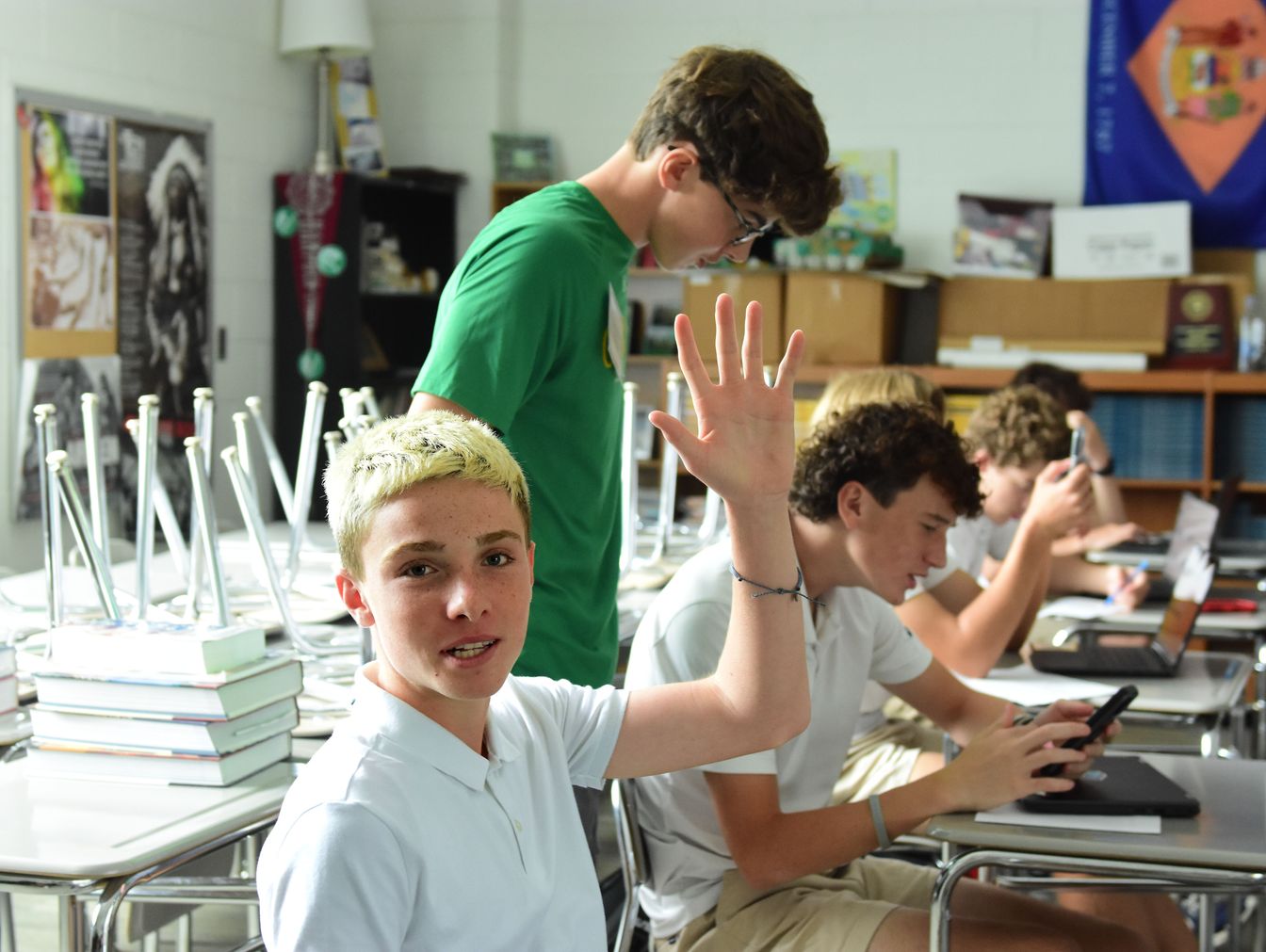
At Cardinal Gibbons, one club is quietly building some of the school’s strongest voices. Debate club, moderated by Mr. Keith Pakela and led by student leaders Zayla Ernest and Marley Wilson, has become a place where students learn how to confidently speak their minds while still continuously showing respect for opposing viewpoints.
From mock debates to real competitions, the Debate Club is proving that speaking up is a skill that can shape students far beyond the classroom.
A Club Built on Conversation
Debate Club’s purpose goes far beyond simply winning arguments, it’s about getting students to talk about current events and real world issues.
According to Pakela, the club was founded long before he became the current moderator, with leadership previously guided by staff members like Mrs. Laura Ingerham . He credits Ingerham and current students for keeping the tradition alive.
“The original purpose… was to get students talking,” Pakela said. He explained that Debate Club gives many students an outlet to discuss topics that may feel uncomfortable to bring up at home whether they’re political, social or ethical issues.
“I hope that students feel welcomed, able to speak their mind, and willing to go to a debate or two and really press themselves and their abilities to the limit,” said Pakela.
Building Confidence and Skills for the Future
Debate Club focuses on preparing students with skills that are useful in school and beyond.
Pakela said the most important skill students develop is being able to confidently present their arguments using research information. He also emphasized the importance of learning how to take feedback, give feedback and speak in front of others.
“These particular skills are vital for the future,” he said, explaining that students will eventually need to speak publicly in college and careers.
Student leader Zayla Ernest agreed, saying public speaking is a major reason she wanted to join debate in the first place.
“I love the idea of public speaking and I think it’s such an integral part of debate,” said Ernst, “but also becoming older and becoming more fully rounded because you need to speak publicly in any job scenario.”
How Students Prepare for Competitions
Debate Club isn’t just casual discussion, it requires serious preparation.
Student participant Christina Wick explained that preparation includes practicing rebuttals, running mock debates and building speechings using sources for both sides of an argument.
During competitions students are randomly assigned either the affirmative or negative side, which forces them to understand the issue from every angel. Wick said that typically students debate three times with different teams during competitions.
The team has also grown significantly throughout this year. Wick shared that at the start of the year it was mostly just her and Zayla, but now they are hoping to have around six participants at conferences.
Hot Topics and Competitions and Meeting Style
Debate club doesn’t shy away from major national issues. This year and in past years, students have debated topics such as:
- Whether the U.S. Department of Education should be abolished
- The Wagner Act (1935) and workers rights
- AI in schools
- Many healthcare policy debates
The club’s current debate topic is focused on the Wagner Act, a law that shaped worker rights and union protections.
Debate club competes in multiple conferences throughout the year with around six to seven competitions scheduled. One competition takes place at UNC, while others happen closer to Wake County and nearby districts.
During meetings, students arrange desks in a circle to encourage discussion and collaboration, creating an environment where conversation feels natural and everyone can contribute.
The club’s most recent debate was held on Jan. 31, continuing their steady schedule of events.
Advice for Students Thinking About Joining
Both Pakela and Ernst encourage students to try Debate Club, even if they feel nervous at first.
Pakela said students should be ready to share opinions, think on their feet and put in effort through research and preparation.
“We want to get those jitters out before you get to debate day,” he said, explaining that practice helps students handle pressure.
Ernst offers reassurance to anyone hesitant to join.
“I think students considering joining debate really enjoy it,” she said. “Don’t be afraid to actually complete it is really fun.”
A Place for Growth at Cardinal Gibbons
Debate club is more than just arguing, it’s a place where many students develop confidence, learn real word communication skills and practice respectful discussion even when opinions differ.
With strong leadership from Zayla Ernst and Marley Wilson and guidance from Pakela, debate club is continuing to grow and make an impact at Cardinal Gibbons, one argument at a time.